An untold backstory from the world of Ghost of Bosnia
By Michael Blankenship
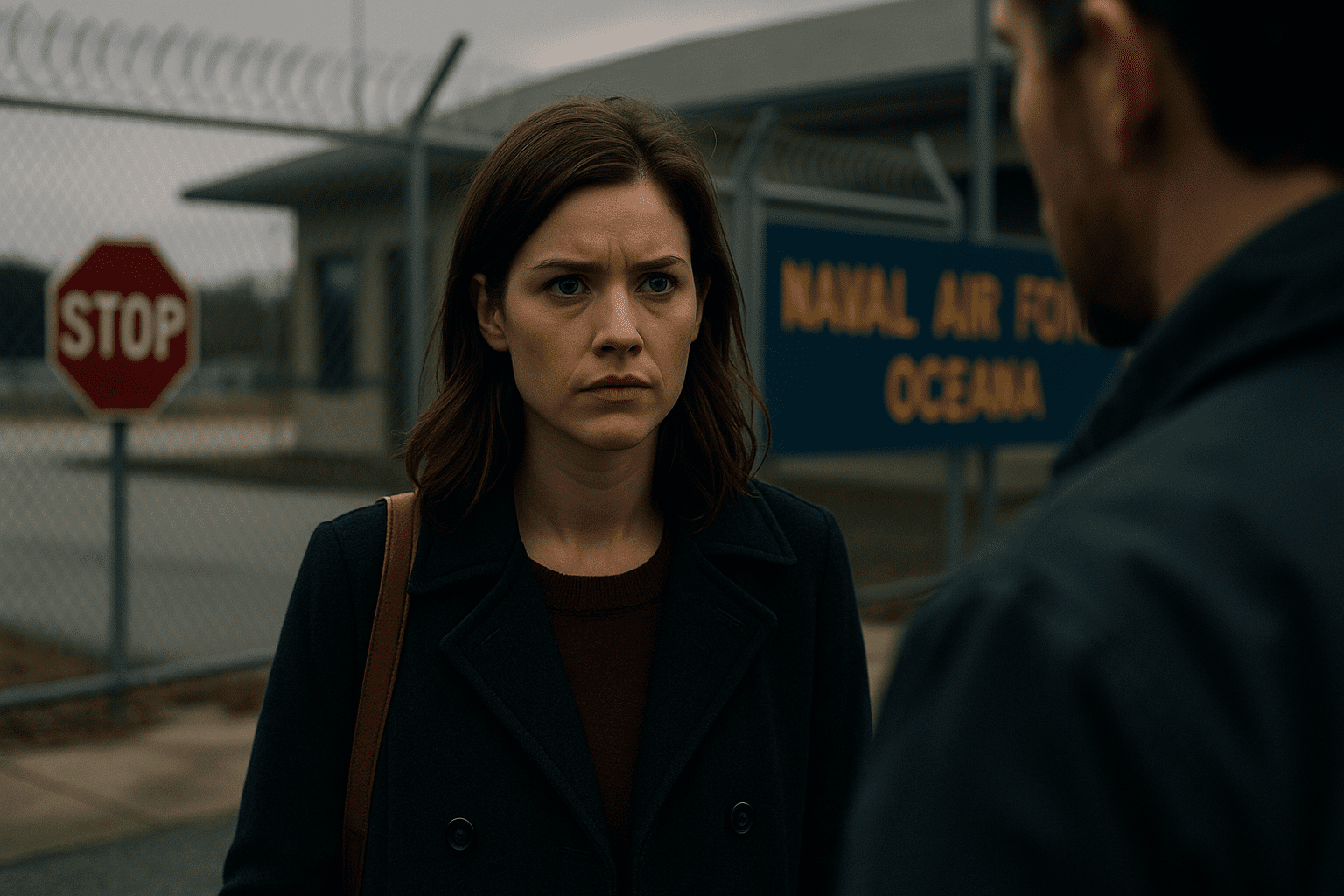
She stood outside the gates at NAS Oceana long after they told her to leave. The security guard had been polite, but firm—standard response for civilians without clearance, even ones with press credentials from Navy-approved publications.
Lauren Harper didn’t move. Not right away.
The late summer heat clung to her neck, sweat pooling at the collar of her shirt. Her satchel hung heavy with notebooks, recorder, press ID—none of it worth anything when no one would open a damn door.
She watched the cars slide through the gate, IDs flashed, salutes exchanged. A closed system. A world where everything ran on rank and silence. Oceana was good at that. She should’ve known better. Should’ve expected it.
But she hadn’t come as a reporter.
She came because she knew. Not just suspected. Knew.
Something had gone wrong during the strike over Bosnia. Terribly wrong. She’d seen the aftermath with her own eyes. She’d been on the ground, close enough to feel it when the air shifted, when the world cracked open.
The official reports painted it clean—surgical, precise, righteous. But Lauren had walked the streets in the hours that followed. She’d seen the bodies. Some of them too small. Some of them carried in silence by men who never made eye contact.
The Navy’s log listed the strike. A routine mission. No casualties reported. “Objective achieved. Area secure.”
It was the coldness of the language that first tipped her off. Not the omissions. The tone.
Since then, the pieces had come slowly. A satellite image from a sympathetic source in Brussels. An unguarded comment buried in a backchannel transcript. And finally, the message that changed everything.
A man’s voice on a phone line, breaking through static like it had something to hide.
“They lied to you. It was a Navy op. Carrier-based. That’s all I can tell you. The official target’s not what they hit.”
Then silence.
That was two weeks ago. The voice hadn’t returned her follow-up calls. The Navy’s media office sent boilerplate replies, citing security restrictions. No comment. No confirmation. No contradiction.
But Lauren now knew who had flown that mission. She’d seen the names, buried in old reports, and cross-referenced them with squadron lists.
Matt Briggs. Jerry Carter. Max Mitchell. Mike Davis.
She didn’t know them. Not really. She knew their photos. Knew what had been said in articles before everything fell quiet. She had a few scraps—enough to know they’d vanished in the weeks that followed the mission. Discharged. Reassigned. Silent.
The mysterious voicemail still played in her ear on nights she couldn’t sleep.
“They lied to you.”
That was all.
She tried texting the number. Left a voicemail of her own. Nothing incriminating—just a window. Just a chance.
He never replied.
And now he was gone, and no one seemed to care why.
She walked back to her car, popped the trunk, and pulled out her recorder. Hit record. Set it on the dashboard.
“I tried,” she said aloud. “Thursday. August 22. 1700 hours. Denied access to Oceana. Told I wasn’t on the access list.”
She stared out through the windshield, past the gate, toward the aircraft noise overhead.
“Carter’s been moved to reserve status. Mitchell is unaccounted for. Briggs left the Navy after Bosnia. No forwarding contact. Davis retired before his command tour was up. No records that aren’t half-scrubbed.”
A pause.
“There’s a story here. A clean-up job. I just haven’t found the hole in the wall yet.”
She clicked the recorder off.
The next day, she tried again—not at the base, but at a bar just off the highway. Pilots used to come here. She remembered hearing the name during her embed, back when she was doing puff pieces and getting bylines in exchange for playing nice.
She parked across the street, stayed in the car, and waited. Late afternoon slid into early evening.
No sign of them.
Inside, the bartender was friendly but cautious. Middle-aged, no-nonsense, the kind of woman who saw more than she said.
Lauren asked gently, casually—like she wasn’t chasing ghosts.
“You remember the guys from VFA-37?” she asked. “Used to come in after ops?”
The bartender glanced over her shoulder, then nodded once. “Used to sit back left. Not loud. Just tight. Real close.”
“You seen them lately?”
“Not for months. All stopped coming at once.”
Lauren frowned. “Any idea why?”
The woman shrugged. “You a reporter?”
Lauren hesitated.
“No,” she said finally. “Just someone who needs the truth.”
The bartender gave her a look—sharp, but not unkind. “That’s what reporters always say.”
That night, back in her apartment, she didn’t write. She didn’t record. She just sat with the folder she kept under the bed.
Labeled in her own hand: OP BLACKBIRD – INQUIRY.
Inside were clipped leads, printouts, scraps of testimony no one would sign. She flipped through them slowly—Razor’s voicemail, the redacted memo, a manila envelope addressed to Matt Briggs. She’d mailed one copy to his address in Virginia Beach. Never heard back.
Everyone told her to move on. Friends. Editors. Even her mother.
“You don’t win fights with the Navy, Lauren.”
But Lauren hadn’t come looking to win. She came because she needed closure. It was personal. Because whatever happened that night had taken more than lives—it had taken voices.
And because somewhere inside all that silence, someone was still holding the truth.
She meant to find them.